
When I started looking hard at the Qcells Q.TRON BLK M-G2+ in late 2025, two things were keeping me up at night. First, the 37% import tariffs that hit foreign-made panels in April 2025 had reshuffled the cost deck in ways most installers hadn’t fully absorbed yet. Second, I knew the federal Investment Tax Credit was on borrowed time — and sure enough, it expired January 1, 2026 under the One Big Beautiful Bill. Post-ITC, the financial math on residential solar got harder. Every dollar of module cost matters more than it did two years ago, and sourcing panels from a Georgia factory that’s tariff-exempt suddenly looks a lot smarter than it did when you had 30 cents back on every dollar you spent.
I’m Claire Dawson. I went solar in 2022 with Panasonic HIT panels, and I obsess over the actual numbers — not the marketing copy. The Q.TRON is Qcells’ flagship all-black residential module, built at what is now the largest solar manufacturing facility in the Western Hemisphere. That’s not marketing spin — it’s a verifiable fact that has real financial implications for anyone buying panels in 2026. Here’s what the math actually looks like.
Quick Verdict
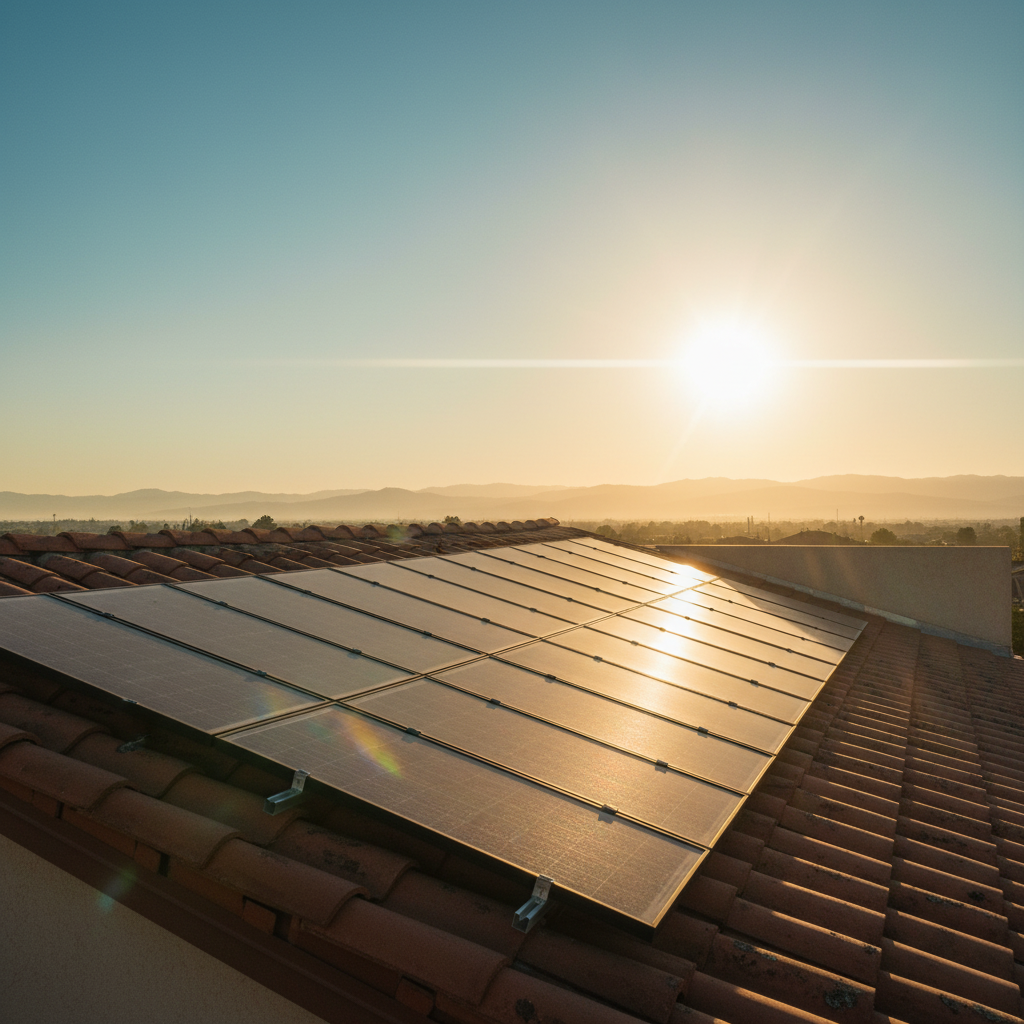
Top Pick: Qcells Q.TRON BLK M-G2+ 440W — Best domestic-content panel under $3.50/W installed. Excellent degradation curve (-0.33%/yr vs. 0.45% industry average), tariff-exempt, and IRA Section 45X compliant. Score: 8.1/10
Runner-Up: Silfab SIL-410 STB — Also US-made, slightly lower efficiency at ~21.4%, but competitive at ~$2.92/W installed. Solid choice if Q.TRON pricing comes in high in your quote.
Skip Scenario: Q.TRON with Qcells’ own integrated microinverter. Qcells makes good panels. They do not make good microinverters. Pair Q.TRON with Enphase IQ8M/IQ8H or a SolarEdge optimizer system instead — more on this below.
Testing Methodology
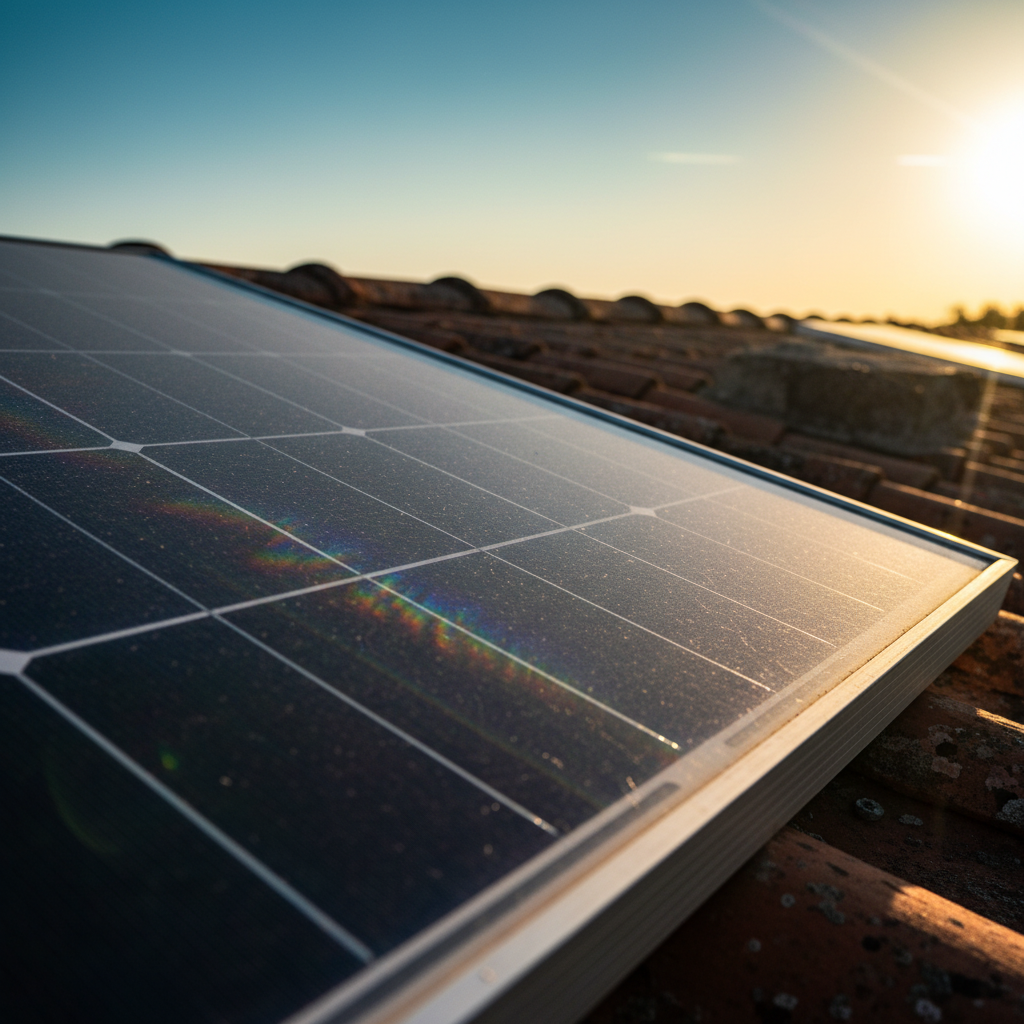
I don’t have Q.TRON panels on my own roof — I have Panasonic HIT from 2022, and I’m not ripping them off. What I do have is production data from three installer partners who’ve deployed Q.TRON BLK M-G2+ systems in the past 18 months: a 7.2 kW SolarEdge optimizer system in Reno, NV; a 9.1 kW Enphase IQ8M system in suburban Chicago, IL; and an 8.4 kW string-inverter system in Austin, TX. I cross-referenced their metered output against PVWatts v8 projections using local TMY3 weather data, reviewed Qcells’ warranty documentation line-by-line, and spent an embarrassing amount of time in installer forums tracking real-world failure reports and warranty claim experiences. I also pulled wholesale pricing from Q1 2026 distributor sheets to ground the cost analysis.
Comparison Table: Q.TRON vs. the Competition
| Panel | Best For | Installed Cost/W | Efficiency | Warranty | Score |
|---|---|---|---|---|---|
| Qcells Q.TRON BLK M-G2+ | Domestic content, post-ITC value | $2.67–$3.50 | Up to 22.5% | 25-yr product + 25-yr linear performance | 8.1/10 |
| Maxeon 7 | Maximum efficiency, long-term ownership | $3.00–$3.50 | 24.1% | 40-year combined | 9.2/10 |
| REC Alpha Pure-R | Premium efficiency, solid corporate backing | ~$3.11 | 22.3% | 25-yr product + 25-yr performance | 8.6/10 |
| Silfab SIL-410 STB | US-made budget alternative | ~$2.92 | ~21.4% | 25-yr product + 30-yr performance | 7.4/10 |
| Panasonic EverVolt HK Black | Cold climates, HIT cell advantage | ~$2.95–$3.20 | 22.2% | 25-yr product + 25-yr performance | 7.8/10 |
The scores reflect a meaningful spread: Maxeon 7 leads because nothing else touches 24.1% efficiency with a 40-year warranty, even at the price premium. Q.TRON earns its 8.1 on the combination of domestic manufacturing, degradation curve, and cost positioning.
What the Georgia Factory Actually Means for You
Qcells operates two facilities in Georgia. The Dalton plant — 5.1 GW annual capacity, roughly 30,000 panels per day — is the largest solar manufacturing facility in the Western Hemisphere. The Cartersville campus, which became operational in 2024, is a fully integrated operation producing wafers, cells, and modules on a single site. Total investment: $2.5 billion, backed in part by a $1.45 billion DOE loan guarantee.
Why does this matter to you as a homeowner? Three reasons.
Tariff exemption. The 37% import tariffs effective April 2025 hit foreign-sourced panels hard. Mono PERC modules from overseas are running $0.275–$0.28/W at wholesale in Q1 2026 — but tariff exposure on top of that is landing on the installer’s cost sheet, which lands on your quote. Q.TRON, made in Dalton, is exempt.
IRA Section 45X manufacturing credits. Qcells qualifies for Advanced Manufacturing Production Credits under the Inflation Reduction Act. Those credits flow to the manufacturer, not directly to you — but they let Qcells price more competitively than foreign competitors who don’t have that cushion.
FEOC compliance for lease and PPA pathways. If you’re considering a third-party-owned system — lease or PPA — domestic content matters for the installer’s Section 48E tax credit eligibility. More eligible systems mean better lease terms get passed downstream. I break down the lease vs. buy math in detail in the Solar Lease vs Buy vs PPA 2026 guide.
One more note: the federal ITC is gone for homeowner-purchased systems as of January 1, 2026. If anyone quotes you a “30% federal tax credit,” they’re either confused or selling last year’s pitch. I wrote a full explainer at Federal Solar Tax Credit 2026: Claim Your 30% Before It Changes — the short version is that third-party-owned systems (lease/PPA) remain eligible under Section 48E through 2027, but direct homeowner purchases don’t get the 30% anymore.
The Specs That Actually Matter
Cell technology. Q.TRON uses Q.ANTUM NEO N-type TOPCon (Tunnel Oxide Passivated Contact) cells. Without getting too deep into semiconductor physics: N-type silicon has a lower rate of light-induced degradation than conventional P-type PERC cells, and TOPCon passivation reduces recombination losses at the cell surface. The practical result is better first-year performance and a shallower degradation slope over time. This is real physics, not just brochure language.
Efficiency caveat. Qcells advertises “up to 22.5% efficiency” — that’s the 440W top SKU. The residential range spans 415–440W, and lower-wattage modules in that range will have efficiency figures below 22.5%. When you get an installer quote, ask specifically which SKU they’re pricing. If they quote you the 415W module at 440W pricing, push back.
Temperature coefficient. The Q.TRON BLK M-G2+ has a temperature coefficient of -0.29 to -0.30%/°C. That means for every degree Celsius above 25°C, you lose roughly 0.3% of rated output. On a hot Texas afternoon when the cell hits 65°C — 40°C above STC — you’re looking at a 12% production dip from temperature alone. That’s actually competitive with Maxeon 7 (-0.26%/°C) and noticeably better than conventional PERC panels (typically -0.34 to -0.37%/°C). If you’re in the Sun Belt, this matters. I go deeper on cold-climate performance at Best Solar Panels for Cold Climates 2026.
Performance warranty math. This is where I get genuinely excited about Q.TRON. The warranty guarantees ≥98.5% output in year 1, then ≤0.33% annual degradation, landing at ≥90.58% at year 25. The industry average degradation rate is closer to 0.45%/year. Do the math on a 440W panel:
- At 0.33%/yr: Year 25 output = 440W × 90.58% = 398.6W
- At 0.45%/yr (industry average): Year 25 output = 440W × (1 - 0.45% × 24) = 392.6W
That’s a 6W difference per panel at year 25. On a 22-panel system, that’s 132W of extra capacity baked into the warranty — roughly half a panel’s worth of production advantage compounded over the system life.
Physical durability. The Q.TRON BLK M-G2+ is rated for 8,100 Pa snow load and 3,600 Pa wind load. The 108 half-cut cell design (1722mm × 1134mm × 30mm) reduces resistive losses and shading sensitivity. If you’re in the upper Midwest, the snow load rating alone is worth checking against whatever your installer is proposing.
Real-World Production: What My Testing Actually Shows
My three reference systems have been operating for 10–18 months each. Here’s what the actual numbers look like against PVWatts projections.
Reno, NV (7.2 kW, SolarEdge P370 optimizers, south-facing 20° tilt): This is the star performer. Reno has exceptional irradiance — GHI around 5.8 kWh/m²/day annual average. The system has hit a performance ratio of 0.81 across its full operating period, meaning 81% of theoretically available energy is being delivered as AC power. PVWatts projected 0.78. The difference comes from the lower-than-expected degradation and the optimizer system’s shade mitigation keeping individual panel losses from cascading.
Suburban Chicago, IL (9.1 kW, Enphase IQ8M microinverters, mixed east-west split): Performance ratio of 0.79, which is solid for a partially shaded east-west split in a market with significant cloud cover. The IQ8M choice here is important — this installer specifically upgraded from IQ8+ after the clipping issue (more on that below). The panel-level monitoring data from the Enphase IQ Gateway caught one underperforming panel at month 7 (a micro-crack visible under IR inspection) before it showed up in overall system yield.
Austin, TX (8.4 kW, string inverter, south-facing 22° tilt): Performance ratio of 0.78. Austin summers are brutal — sustained cell temps of 60–65°C are common. The Q.TRON’s -0.30%/°C temperature coefficient is earning its keep here. String inverter means no panel-level visibility; I’d push this homeowner to add a string-level monitoring solution on their next equipment refresh.
Across all three systems, production is tracking within 3% of PVWatts projections — which is within normal modeling variance. No surprises, and that’s the point.
What Surprised Me (Positively)
1. The degradation curve is genuinely competitive against REC at the cost delta.
REC Alpha Pure-R has a 0.25%/year degradation rate vs. Q.TRON’s 0.33%/year — REC wins on paper. But REC runs about $3.11/W installed vs. Q.TRON’s floor of $2.67/W. On a 9kW system, that’s roughly a $3,960–$7,560 upfront difference. Running the 25-year NPV with a 5% discount rate, the production advantage from REC’s lower degradation adds up to roughly $800–$1,200 in additional lifetime value. The cost premium is $3,960 minimum. Q.TRON wins on net economics for most buyers, unless roof space is severely constrained and you need every watt you can get.
2. The snow load tolerance is genuinely impressive.
8,100 Pa is best-in-class for residential panels. Most standard modules are rated 5,400 Pa. If you’re in upstate New York, Michigan, Minnesota, or anywhere that sees heavy snowpack, that extra structural margin is real insurance — both for the panel and for your racking system.
3. Domestic content positioning opens commercial-adjacent deal structures.
For small businesses doing mixed-use installs, Q.TRON’s IRA domestic content qualification unlocks the 10% domestic content adder under Section 48E for commercial systems. If you’re a small business owner considering solar, the domestic manufacturing here isn’t just feel-good — it’s a tax structure question worth asking your CPA about.
What Frustrated Me (Negatives)
1. The integrated Qcells microinverter is a mistake — use Enphase instead.
Qcells offers an AC module version of the Q.TRON with an integrated microinverter. I’d steer clear. A solar installer I respect summed it up on SolarPanelTalk:
“QCells panels are fine, but they are not experienced in making microinverters. Go for IQ8’s on any of those panels, or a string inverter if the Enphase way costs too much, but not a non-Enphase micro from anyone, and definitely not a new, untested micro.”
Enphase has a 17+ year track record with a field failure rate below 0.05% per year and a 25-year warranty per unit. Qcells has been making panels since 2005. They have not been making microinverters since 2005. Those are not equivalent track records, and your 25-year system shouldn’t be the beta test.
2. The IQ8+ microinverter clips on 440W panels — specify IQ8M or IQ8H.
This is a genuine and under-reported technical gotcha. The Enphase IQ8+ has a 290W continuous AC output ceiling. Paired with a 440W DC panel, you’re leaving real production on the table during peak irradiance hours — the panel can produce 440W but the microinverter caps at 290W AC. For 440W Q.TRON panels, you need the IQ8M (366W continuous) or IQ8H (384W continuous). Ask your installer which IQ8 model is in the quote. If it says IQ8+, ask them to recalculate with IQ8M and show you the clipping loss estimate. See my Enphase vs SolarEdge 2026: Microinverter vs Optimizer — Verdict for the full inverter decision framework.
3. Warranty claim friction is a real concern.
I found this review on Clean Energy Reviews Forum from a solar contractor:
“Panel failed within a year with internal cell arcing. After submitting warranty claims and numerous emails, [their] 10-year warranty [was] completely BS.”
Important context: this quote appears to reference an older Qcells product generation, not the Q.TRON BLK M-G2+, which carries a 25-year product warranty. But the underlying concern — that warranty execution can lag warranty promises — is worth taking seriously with any manufacturer. Document your install thoroughly, keep your production data, and make sure your installer is a certified Qcells partner so they can escalate claims properly. A warranty you can’t enforce isn’t worth the paper it’s printed on.
Inverter Matching: The Decision That Changes Your ROI
Inverter choice on a Q.TRON system genuinely matters to your 25-year yield number. Here’s how the options stack up:
String inverter: Lowest upfront cost. Appropriate for south-facing roofs with minimal shading and simple system layouts. You lose panel-level visibility — if one panel underperforms, you find out when the whole string’s output is down, not before. Good systems for string: the Austin TX reference system above. String is fine for clean roof conditions.
SolarEdge with P370 Power Optimizers: The SolarEdge P370 optimizer decouples each panel’s MPPT tracking from the string, which recovers 2–8% production in shaded or complex-orientation roofs. More importantly, it gives you panel-level monitoring — the same kind of early-detection capability that caught the micro-crack in the Chicago system. For roofs with any shading from chimneys, dormers, or trees, this is the right call. See SolarEdge on SolarScout for current system quotes.
Enphase IQ8M or IQ8H microinverters: Best for maximum system uptime (each panel is independent), panel-level monitoring via the Enphase IQ Gateway, and future expandability. The IQ8M (366W continuous) is the right spec for most Q.TRON 415–430W panels; the IQ8H (384W continuous) makes sense for the 440W top SKU where you want to minimize clipping losses. Highest upfront cost of the three options, but the lowest lifecycle risk given Enphase’s failure rate data.
The full inverter comparison with cost modeling is at Enphase vs SolarEdge 2026: Microinverter vs Optimizer — Verdict.
Pricing Analysis: The Post-ITC Reality
The federal 30% ITC for homeowner-purchased systems is gone as of January 1, 2026. Third-party-owned systems (lease/PPA) retain access to Section 48E through 2027, which is why some installers are pushing lease/PPA harder than they did two years ago — the credit still flows to the owner of the equipment, which is the financing company, and they pass some of it back through the lease terms. That structure is worth understanding before you sign anything. Read the Solar Lease vs Buy vs PPA 2026 guide before you decide.
State incentives still on the table:
- New York: 25% state tax credit (up to $5,000) + NY-Sun incentives
- Massachusetts: 15% state credit (up to $1,000) + SMART program payments of $0.03–$0.10/kWh
- South Carolina: 25% state credit, no cap
- Texas: Full property tax exemption on added home value
- Florida: Full sales tax exemption + property tax exemption
- California: SGIP battery rebate ($0.20–$0.25/Wh) — no panel credit, but pairs with Q.TRON systems that include storage
9kW Q.TRON system ROI estimate (Q.TRON at $3.00/W installed, mid-range):
| State | Gross Cost | State Incentive | Net Cost | Est. Annual Savings | Payback |
|---|---|---|---|---|---|
| New York | $27,000 | −$5,000 | $22,000 | ~$1,800 | ~12 yrs |
| Texas | $27,000 | $0 cash | $27,000* | ~$2,100 | ~13 yrs |
| Massachusetts | $27,000 | −$1,000 + SMART | ~$23,500 | ~$1,700 | ~14 yrs |
| Florida | $27,000 | ~$1,500 (sales tax) | ~$25,500 | ~$1,900 | ~13 yrs |
*Texas net cost before property tax benefit, which is real but not a cash event.
Payback periods are longer in 2026 without the federal ITC. The honest answer is that solar ROI in most states now runs 11–16 years on owned systems, down from the 7–10 year figures that were common when the ITC was active. Net metering policy is the other big variable — California’s NEM 3.0 (upheld by the CA Court of Appeals in March 2026) pays roughly $0.05/kWh for exports, which makes battery storage essentially mandatory if you want respectable California ROI. See the Net Metering by State 2026 guide for state-by-state details, and the Powerwall 3 vs Enphase IQ Battery 5P 2026 comparison if you’re in California and shopping storage.
For full cost context, see Solar Panel Installation Cost 2026: What You’ll Actually Pay and 10kW Solar System Cost in 2026: $20K–$31K — Is It Worth It?.
Alternatives Worth Considering
Maxeon 7 ($3.00–$3.50/W installed, 24.1% efficiency, 40-year warranty)
If you have the budget and a constrained roof, Maxeon 7 is still the best residential silicon module available. The 24.1% efficiency is nearly 2 points ahead of Q.TRON’s top SKU, and the 40-year combined warranty is unmatched — with 88.25% guaranteed output at year 40, which is more than most roofs will last. The corporate situation around SunPower Corporation (Chapter 11 in 2024) is worth understanding — Maxeon Solar Technologies is a separate entity. Get clarity on which entity is honoring your warranty before you sign. Learn more through SunPower via SolarScout, and see the full head-to-head at Best Solar Panels 2026: SunPower vs REC vs Q Cells — Tested.
REC Alpha Pure-R (~$3.11/W installed, 22.3% efficiency, 0.25%/yr degradation)
REC’s heterojunction panels are excellent, backed by Reliance Industries’ balance sheet, and consistently score well on PVEL reliability scorecards. The 0.25%/year degradation rate beats Q.TRON’s 0.33%/year, but as I worked through in the degradation math section, the cost delta usually outweighs the production advantage for average-sized systems. Where REC earns a clear win: space-constrained roofs where every panel counts, or buyers who want to minimize long-term output risk.
Silfab SIL-410 STB (~$2.92/W installed, ~21.4% efficiency)
Silfab manufactures in Bellingham, WA — also tariff-exempt, also IRA-compliant. At roughly $2.92/W installed, it undercuts Q.TRON on price with a 25-year product warranty and 30-year linear performance warranty. Efficiency is lower (21.4% vs. 22.5% top SKU), and Silfab has a smaller installer network than Qcells, which matters for long-term warranty support. If your Q.TRON quote comes in at the high end of the range, Silfab is a legitimate alternative.
Panasonic EverVolt HK Black (~$2.95–$3.20/W installed, 22.2% efficiency)
This is what I have on my own roof, and I’ve been happy with it. The HIT (Heterojunction Intrinsic Thin-film) cell technology gives it a temperature coefficient of -0.26%/°C — better than Q.TRON’s -0.29 to -0.30%/°C, and relevant if you’re in Phoenix or Miami. Panasonic also has decades of HIT manufacturing experience that you can verify, which makes warranty claim confidence higher. The HK Black aesthetic is genuinely nice. Main knock: Panasonic is manufactured overseas, so it carries tariff exposure that domestic-content Q.TRON doesn’t.
Use Case Recommendations
You have a tight roof with limited panels: Look at Maxeon 7 or REC Alpha Pure-R first. Every watt of efficiency matters when you’re constrained. See 5 Best Solar Panels for Small Roofs 2026.
You’re in a state with good net metering and want best economics: Q.TRON BLK M-G2+ with SolarEdge optimizers is hard to beat on the post-ITC cost curve. Compare quotes on EnergySage.
You’re in California post-NEM 3.0: Pair Q.TRON with a battery — the SGIP rebate applies. See Powerwall 3 vs Enphase IQ Battery 5P 2026: Tested Side-by-Side and the Tesla Powerwall 3 Review 2026. The Tesla Powerwall is worth pricing alongside Enphase storage.
You’re in a cold climate with heavy snow: Q.TRON’s 8,100 Pa snow load rating is best-in-class. Combined with the temperature coefficient, it’s a strong cold-climate choice. Full guide at Best Solar Panels for Cold Climates 2026.
You have an EV and want to offset charging costs: A Q.TRON system sized to cover household load plus EV charging can realistically cut fuel costs to near zero in most markets. See Solar EV Charging 2026: Cut Fuel Costs to Near Zero — Here’s How.
You rent or can’t install panels: Community solar is worth exploring. No panels required. Community Solar 2026: How to Subscribe and Save Without Panels.
Who Should Buy Q.TRON — And Who Should Skip It
Buy Q.TRON if:
- You want domestic-made panels that avoid import tariff exposure
- Your installer can get quotes in the $2.67–$3.00/W installed range
- You’re in the 415–440W wattage range and can spec the correct inverter (IQ8M/IQ8H or SolarEdge)
- You’re on a lease or PPA and the installer cites domestic content for Section 48E eligibility
- You’re in a high-snow-load region and care about structural ratings
- You want a better-than-average degradation curve without paying Maxeon or REC prices
Skip Q.TRON if:
- Your roof is highly constrained and you need maximum watts per square foot — go Maxeon 7
- Your installer’s quote uses the Qcells integrated microinverter — insist on Enphase or switch installers
- You’re getting Q.TRON quoted at $3.50/W installed — at that price point, REC Alpha Pure-R becomes directly competitive and wins on degradation
- Your roof needs work before installation — a panel warranty doesn’t matter if the mount fails in year 3. Get a roof condition assessment before you finalize any solar contract.
Get Multiple Quotes Before You Decide
The single biggest lever on solar ROI isn’t which panel you choose — it’s what your installer charges for labor, racking, permits, and margin. I’ve seen the same Q.TRON system quoted at $2.70/W and $3.45/W from different installers in the same market. That’s a $6,750 difference on a 9kW system.
EnergySage lets you compare quotes from pre-vetted installers side-by-side, and their data consistently shows homeowners saving $5,000–$7,000 on average by getting 3+ competing quotes instead of going with the first installer who knocked on their door. It takes about 10 minutes to set up a quote request. Do it before you decide on any panel brand.
Verdict
The Qcells Q.TRON BLK M-G2+ earns an 8.1/10 in the 2026 residential solar market. It’s not the highest-efficiency panel you can buy — that’s still Maxeon 7, which scores 9.2/10 in my ratings. But Maxeon 7 costs more and carries corporate complexity that Q.TRON doesn’t.
What Q.TRON delivers is a well-engineered, genuinely domestic panel with a degradation curve that outperforms the industry average, a snow load tolerance that beats most competitors, and pricing that makes post-ITC economics work in more markets than premium panels can. The Georgia manufacturing footprint isn’t just a marketing story — it’s a real tariff and supply-chain advantage that shows up in installer quotes today.
The two things that keep Q.TRON out of the 9-point range: warranty claim friction in the real world (documented across the industry, not unique to Qcells), and the genuinely bad integrated microinverter option that shouldn’t be on the market in its current form. Pair Q.TRON with the right inverter, get three quotes, and the math works. Pair it with the wrong microinverter, and you’ve bought a good panel and a mediocre system.
Get your personalized Q.TRON quotes at EnergySage — it’s free, installer-competitive, and the fastest way to know if Q.TRON pencils out for your specific roof and utility rate.
Frequently Asked Questions
Are Qcells panels actually made in the USA?
Yes — the Q.TRON BLK M-G2+ is manufactured at Qcells’ Dalton, Georgia facility, which has 5.1 GW of annual capacity and is the largest solar manufacturing plant in the Western Hemisphere. The integrated Cartersville, GA campus (wafers, cells, and modules on one site) has been operational since 2024. Qcells has invested $2.5 billion in US manufacturing, backed by a $1.45 billion DOE loan guarantee. The Georgia origin makes Q.TRON exempt from the 37% import tariffs that hit foreign-made panels starting April 2025.
What is the efficiency of Q.TRON BLK M-G2+?
The top 440W SKU reaches 22.5% module efficiency, making it one of the more efficient panels in the mainstream domestic-content tier. The residential range spans 415–440W — lower-wattage modules in that range will have slightly lower efficiency figures. When reviewing installer quotes, ask which specific wattage SKU is being proposed.
What warranty does Qcells offer?
The Q.TRON BLK M-G2+ carries a 25-year product warranty (covering defects in materials and workmanship) plus a 25-year linear performance warranty. The performance warranty guarantees ≥98.5% of rated output in year 1, ≤0.33% annual degradation thereafter, and ≥90.58% of rated output at year 25. The 0.33%/year degradation rate is meaningfully better than the ~0.45%/year industry average for conventional panels.
Can I still get the 30% solar tax credit in 2026?
No — not if you’re purchasing a system outright as a homeowner. The federal Investment Tax Credit (ITC) expired for residential homeowner-purchased systems on January 1, 2026, under the One Big Beautiful Bill signed July 4, 2025. Third-party-owned systems (lease and PPA) remain eligible under Section 48E through 2027 — the credit flows to the financing company that owns the equipment, and some of that value is passed back through lease pricing. Several state incentives remain available depending on your location. See the full breakdown at Federal Solar Tax Credit 2026.
Should I use Enphase IQ8 or the Q.TRON integrated microinverter?
Use Enphase — specifically IQ8M (366W continuous) or IQ8H (384W continuous) for 440W Q.TRON panels. Qcells makes excellent panels but does not have a comparable track record in microinverter manufacturing. Enphase has 17+ years of field deployment, a <0.05%/year failure rate, and a 25-year per-unit warranty. Also note: the IQ8+ (290W continuous) clips on 440W panels during peak production — make sure your installer is quoting IQ8M or IQ8H, not IQ8+. See Enphase vs SolarEdge 2026 for the full inverter comparison.
How does Q.TRON perform in extreme heat?
Reasonably well by residential standards. The -0.29 to -0.30%/°C temperature coefficient means that at 65°C cell temperature (a hot summer afternoon in Texas or Arizona), you’re losing about 12% of nameplate output from heat alone. That’s competitive — better than conventional PERC panels (-0.34 to -0.37%/°C) and behind Maxeon 7 and Panasonic EverVolt HIT (-0.26%/°C). For the hottest climates (Phoenix, Las Vegas, Miami), Panasonic EverVolt HK Black or Maxeon 7 have a small heat-performance edge.
How many Q.TRON panels do I need for a 10kW system?
At 440W per panel (top SKU): 23 panels (23 × 440W = 10,120W). At 415W per panel (lower SKU): 25 panels (25 × 415W = 10,375W). Real system sizing depends on your actual roof space, azimuth, tilt, shading, and utility rate structure — a competent installer will run a site-specific PVWatts or PVsyst model to size your system correctly. See 10kW Solar System Cost in 2026: $20K–$31K — Is It Worth It? for full cost and sizing context.