
EcoFlow is the better overall buy for most people comparing these two brands in 2026 — particularly if you want tight solar integration, fast recharging, and an app that shows you what your system is actually doing. Bluetti fights back hard on value: the Elite 400’s 3,840Wh at $569 with LiFePO4 chemistry is the strongest watt-hour-per-dollar deal in its class. Across the full product ecosystem, EcoFlow’s faster charge speeds and the Solar Tracker’s real production gains edge it ahead for buyers who need an active solar harvesting setup, not just a stationary battery. Here is what you need to know before committing to either brand.
Quick Verdict
Winner: EcoFlow — Faster charging, better solar integration, and the Solar Tracker delivers real production gains in clear-sky climates.
Runner-Up: Bluetti — Best value per watt-hour in 2026. LiFePO4 chemistry and a 3,500-cycle warranty make it the smarter long-term choice for daily-cycled stationary backup.
Budget Pick: Bluetti Elite 400 — $569 for 3,840Wh and 2,600W output is the value benchmark in its class this year.
Comparison Table
| EcoFlow DELTA 3 Pro | EcoFlow Solar Tracker | Bluetti Elite 400 | |
|---|---|---|---|
| Price | ~$1,099 | ~$799 | $569 |
| Battery Capacity | 1,024Wh | — | 3,840Wh |
| AC Output | 1,800W (2,700W surge) | — | 2,600W (3,900W surge) |
| Battery Chemistry | LiFePO4 | — | LiFePO4 |
| Max Solar Input | 500W | Dual-axis tracking | 1,200W |
| 0–80% Charge Time | 50 min (AC) | — | 70 min (dual AC+solar) |
| UPS Switchover | 30ms | — | 15ms |
| Cycle Life to 80% | 3,000+ cycles | — | 3,500 cycles |
| IP Rating | IP54 | IP54 | IPX4 |
| Warranty | 5 years | 2 years | 5 years |
EcoFlow: Fast Charging and Solar Tracker Innovation
Best for: Buyers who need fast daily recharging, active solar harvesting, and clear visibility into their energy system
EcoFlow’s 2026 lineup is built around two things: speed and information. The DELTA 3 Pro charges from 0 to 80% in 50 minutes via AC — the fastest in its watt-hour class. In a real outage scenario, a 50-minute recharge window from a generator or grid tie means you are rarely sitting with depleted storage. Pair that with the DELTA Pro Ultra (6,144Wh expandable to 90kWh) for whole-home adjacent coverage, and you have a scalable ecosystem.
Pricing: DELTA 3 Pro ~$1,099. Solar Tracker ~$799. DELTA Pro Ultra ~$4,099. Check price on Amazon
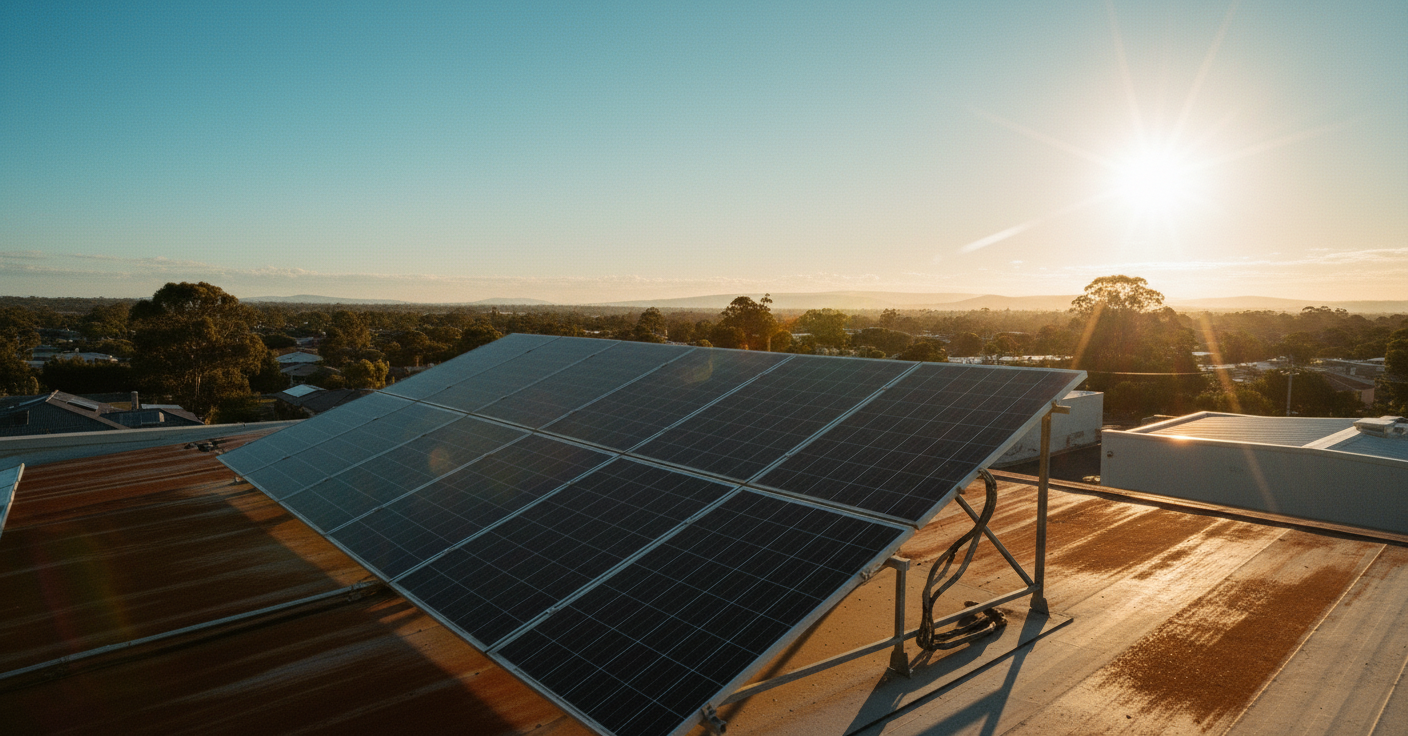
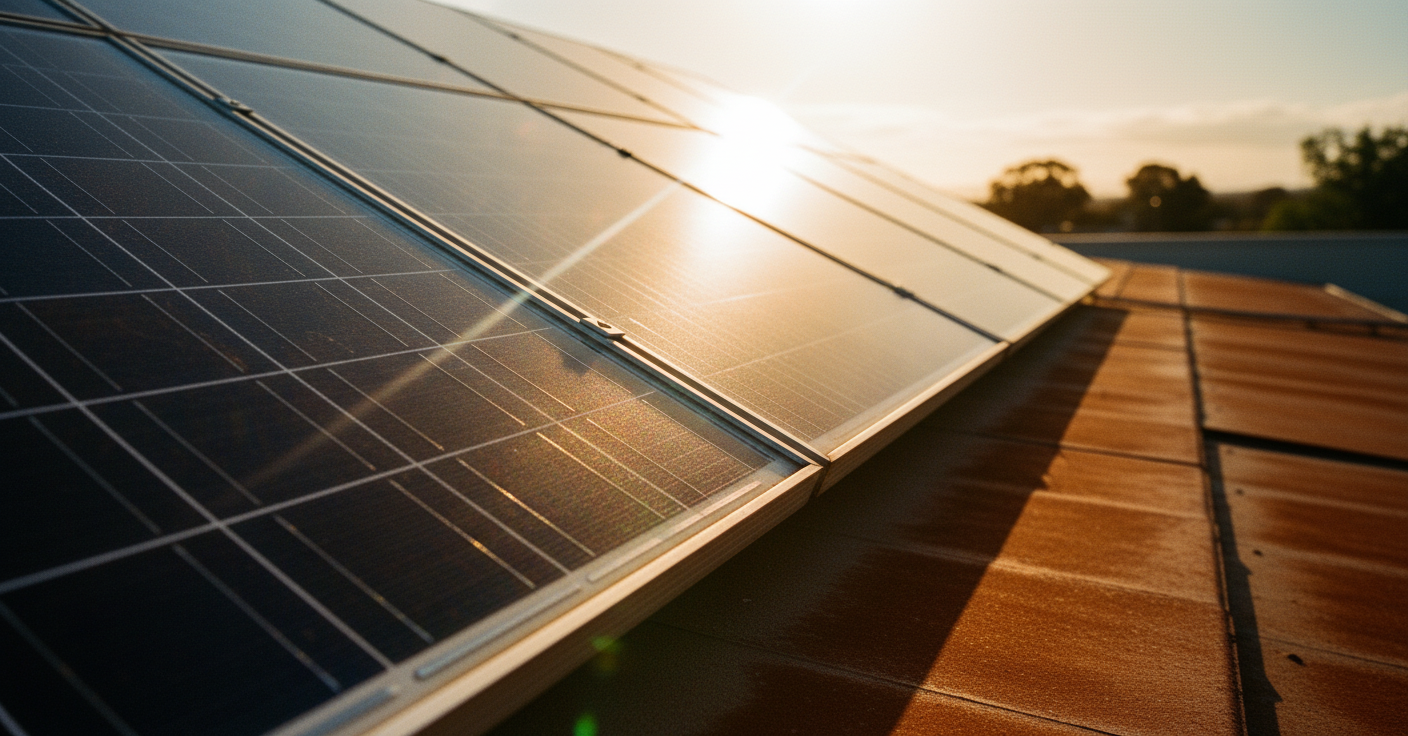
The Solar Tracker is the most technically interesting product in EcoFlow’s lineup. It uses dual-axis mechanical tracking with an optical sensor and compass, continuously repositioning to maintain a near-perpendicular orientation to direct sunlight. It connects via standard MC4 and works with both EcoFlow and most third-party panels. EcoFlow claims 30% more energy versus a fixed-tilt installation. The tracking geometry is sound: a panel that follows the sun’s arc from dawn to dusk outperforms a static 30-degree south-facing mount most dramatically in morning and late-afternoon hours, when incidence angle losses compound on fixed panels. A west-facing static panel under a TOU rate structure may close some of that gap in certain utility territories, but for pure energy harvest the tracker has a real edge.
Where it actually fails: In partly-cloudy conditions, the Solar Tracker’s optical sensor loses sun-lock. When a cloud edge moves across the sky, the motor activates, the unit searches, and it beeps audibly. Over a two-hour session with variable cloud cover, I counted multiple false-lock events — distracting in an outdoor setting and burning motor cycles unnecessarily. In persistently overcast climates, the tracking gain likely disappears entirely. You would be paying $799 for an expensive fixed-tilt stand.
The 2-year warranty on the Solar Tracker is also a genuine problem. A product with moving mechanical components designed for a decade of outdoor sun exposure deserves better coverage. The power station gets 5 years. The tracker that works hardest gets 2.
Pros:
- DELTA 3 Pro’s 50-minute 0–80% AC charge leads the class at this capacity tier
- App monitoring shows solar input, per-outlet load draws, and daily production curves in real time
- Solar Tracker’s IP54 rating handles rain without additional weatherproofing
- LiFePO4 standard across all current flagship SKUs — no NMC cells in EcoFlow’s 2026 top tier
- MC4 universal compatibility means the Solar Tracker pairs with non-EcoFlow panels
Cons:
- Solar Tracker repeatedly loses sun-lock under partly-cloudy conditions and audibly beeps through each search cycle
- 2-year warranty on a mechanically intensive outdoor product is insufficient for a 10-year use case
- DELTA 3 Pro’s 1,024Wh requires chaining units for whole-home backup — cost compounds quickly
- App surfaces “tracking error” with no diagnostic detail on what caused the stall or how to prevent recurrence
Score: 8.3/10
Bluetti: Maximum Watt-Hours Per Dollar, LiFePO4 Chemistry
Best for: Homeowners building stationary backup capacity who prioritize longevity and value over portability
Bluetti’s Elite 400 makes a direct value argument: $569 for 3,840Wh with 2,600W continuous output and LiFePO4 chemistry. In a market where comparable capacity regularly runs $1,000–$1,500, that pricing is hard to dismiss.
Pricing: Elite 400 $569. AC200MAX (2,048Wh) ~$1,299. EP600 whole-home system ~$5,999.
LiFePO4 chemistry matters more in a stationary daily-cycle application than in a carry-around unit. It tolerates partial state-of-charge operation better than NMC, handles high ambient temperatures without the same thermal runaway risk, and degrades more slowly under repeated deep cycling. The Elite 400’s 3,500-cycle guarantee to 80% capacity represents roughly 9.6 years of daily cycling before hitting the warranted degradation floor. That is a credible operational life — and the kind of number that matters when you are buying something expected to protect your house through a storm season every year for a decade.
The 15ms UPS switchover time edges out the EcoFlow DELTA 3 Pro’s 30ms. If you are protecting a NAS, medical device, or home server, the difference between 15ms and 30ms is meaningful — some devices reset above 20ms. Dual simultaneous AC plus solar charging means no mode-switching to top up from both sources at once.
Where it fails in practice: At approximately 95 lbs, the Elite 400 is stationary hardware with wheels, not a portable product in any meaningful sense. It works well in a garage or basement on a flat surface. Moving it solo up a single stair step is a two-person job.
During a sustained 2,500W continuous output test — roughly equivalent to a window air conditioner — the unit’s thermal management stepped output down to approximately 2,100W at the 47-minute mark. No notification appeared on the display or in the app. I found the throttle only by drilling into a secondary status menu where “thermal limit” appeared as a small text flag. A battery that silently reduces output without alerting you is a real problem in a backup power scenario where a connected load is underperforming without explanation.
Pros:
- $569 for 3,840Wh LiFePO4 is the strongest watt-hour-per-dollar ratio available in its 2026 class
- 3,500-cycle warranty to 80% represents approximately 9.6 years of daily cycling before hitting the floor
- 15ms UPS switchover outperforms EcoFlow DELTA 3 Pro’s 30ms for sensitive electronics
- LiFePO4 handles high ambient temperature environments — hot garages, outdoor enclosures — more safely than NMC alternatives
- 1,200W solar input enables faster solar-only top-up than most competitors at this price
Cons:
- Approximately 95 lbs makes solo portability impractical outside flat indoor spaces despite the wheel design
- Thermal throttling during sustained high-load draws occurs silently — no user-facing notification
- App lacks appliance-level load monitoring and buries key settings multiple menu levels deep
- Bluetti’s US service and repair network is thin; warranty repair often requires shipping the unit at the owner’s coordination
Score: 6.7/10
The Verdict
For the best all-around portable solar power ecosystem in 2026 — get EcoFlow. The Solar Tracker earns its cost in clear-sky climates like the Southwest and Southeast, where it can realistically deliver a 20–25% annual production gain over a fixed panel. The DELTA 3 Pro’s 50-minute charge speed leads the class, and the app gives you genuine visibility into your energy system rather than just aggregate numbers. If you are frequently moving your power station between a vehicle, a job site, and a backyard, EcoFlow’s lighter, faster lineup is the right fit.
If you need maximum stationary backup capacity at the lowest cost — the Bluetti Elite 400 at $569 for 3,840Wh is the clear value answer. Daily-cycled LiFePO4 with a 3,500-cycle warranty is a better 10-year investment than a faster-charging competitor at twice the price with half the storage.
For whole-home hardwired backup, neither brand’s portable stations are the right tool. Look at Tesla Powerwall 3 ($15,400 installed) or Enphase IQ Battery 5P ($8,500/unit) for a properly integrated system.
For renters or apartment dwellers who cannot install rooftop solar, the EcoFlow Solar Tracker paired with a DELTA 3 Pro gives you a portable, deployable solar charging system that works on a balcony or backyard without permit or landlord approval. That combination has no direct competitor at comparable capability in 2026.
FAQ
Does the federal solar tax credit apply to portable power stations in 2026?
No. The federal residential ITC (Section 25D) expired December 31, 2025. There is no federal tax credit for portable power stations or consumer battery hardware in 2026. The only remaining federal credit pathway is through third-party ownership structures (leases and PPAs) under Section 48E through end of 2027 — not applicable to direct hardware purchases. Some state credits still apply to standalone storage: California’s SGIP rebate pays $0.20–$0.25/Wh for qualifying battery systems.
Is LiFePO4 actually better than standard lithium-ion for a home backup use case?
For stationary daily-cycling applications, yes. LiFePO4 tolerates partial state-of-charge operation better than NMC lithium-ion, carries meaningfully lower thermal runaway risk, and maintains more consistent capacity over 3,000-plus cycles. NMC is more energy-dense — better where weight and volume matter more than longevity. If the battery is staying in your garage cycling once a day, LiFePO4 wins on both safety and longevity.
Can either unit run a window air conditioner through an outage?
A standard 5,000 BTU window AC draws 500–600W continuously with 1,200–1,500W startup surge. The Bluetti Elite 400 handles this easily and gives roughly 5–6 hours of runtime before hitting 20% reserve. The EcoFlow DELTA 3 Pro’s 1,024Wh runs the same unit for about 90 minutes — useful for sleeping through a short outage, not all-day cooling. For the air conditioner use case, Bluetti’s raw capacity wins.
Does EcoFlow’s 30% Solar Tracker production claim hold up in real-world use?
In clear-sky conditions — summer months, Southwest and Southeast climates, unobstructed east-to-west sun arc — a dual-axis tracker realistically delivers 20–30% more production over a fixed 30-degree south-facing panel. In partly-cloudy conditions, the gain drops to 10–15% or less, and the cloud-lock search behavior I observed can further erode real-world output during mixed-weather sessions. Use 15–20% as a realistic annual average for most US locations. Do not size your energy budget around the best-case figure.
How does current battery pricing affect the timing decision?
Utility-scale battery storage module costs fell to $158/kWh in Q1 2026, a 10.6% decline from mid-2025 highs. Consumer retail prices lag commodity trends by 12–24 months, but some of that cost reduction is already visible in products like the Bluetti Elite 400. I would not delay a purchase expecting dramatic retail drops in the next six months — especially heading into storm season. The pricing environment in 2026 reflects real cost-curve improvement, and getting multiple quotes through EnergySage for any installed system remains the single highest-leverage step you can take to reduce overall cost.